Tripped Circuit Breaker in Your Waitara Home
Circuit breaker keeps tripping and you're not sure why? Call (02) 9538 7444 and let's narrow down what's actually behind it.
What a Tripped Circuit Breaker Actually Means
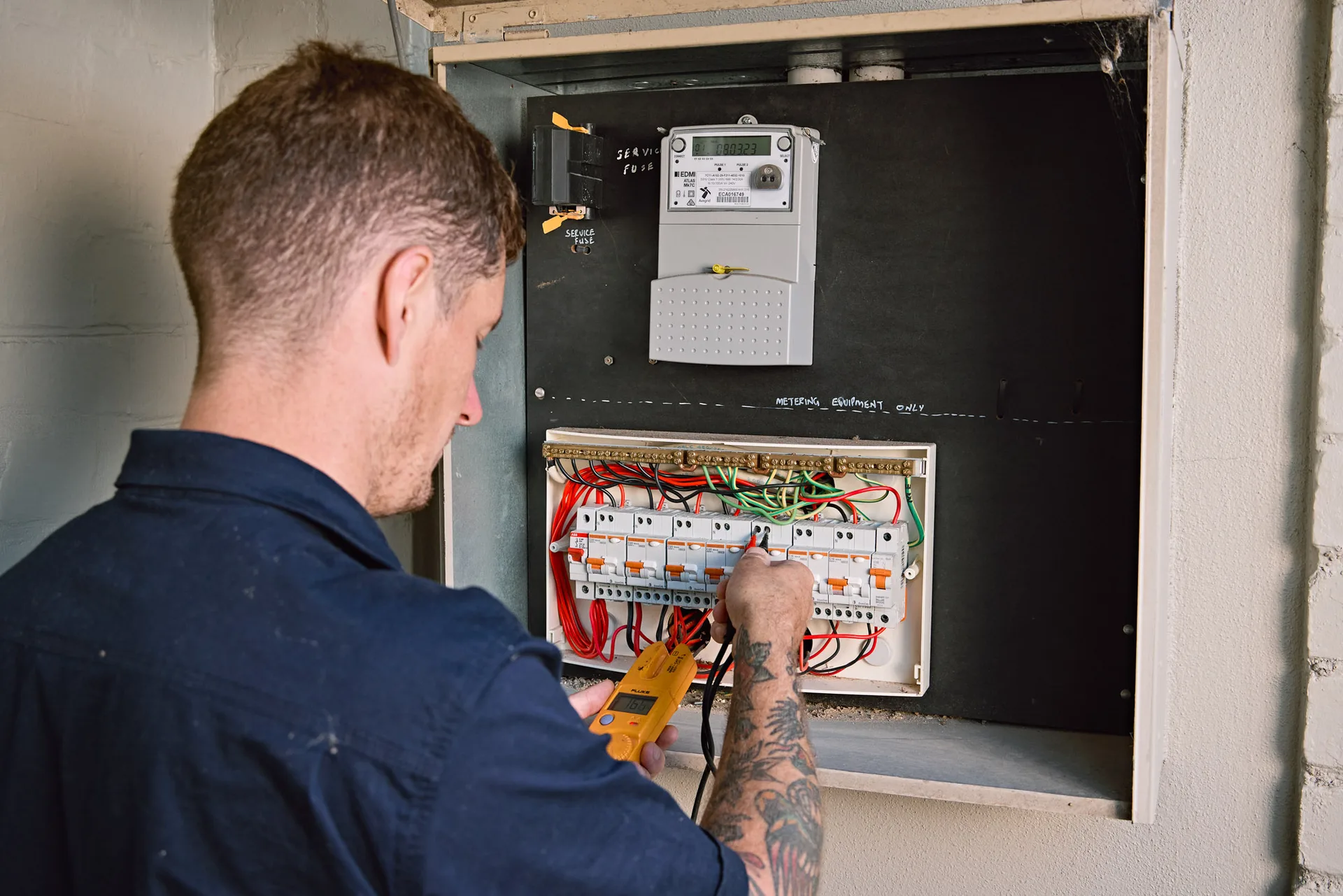
A circuit breaker trips as a deliberate safety response, cutting power the moment it detects more current flowing than the circuit is designed to carry.
That's the breaker doing exactly what it's meant to do, protecting the wiring behind it from overheating. Working out why the load climbed that far is what actually matters, since the trip itself is just the symptom.
Breakers that trip once and reset cleanly are usually telling a different story to ones that trip repeatedly no matter what you do.
The Most Likely Causes
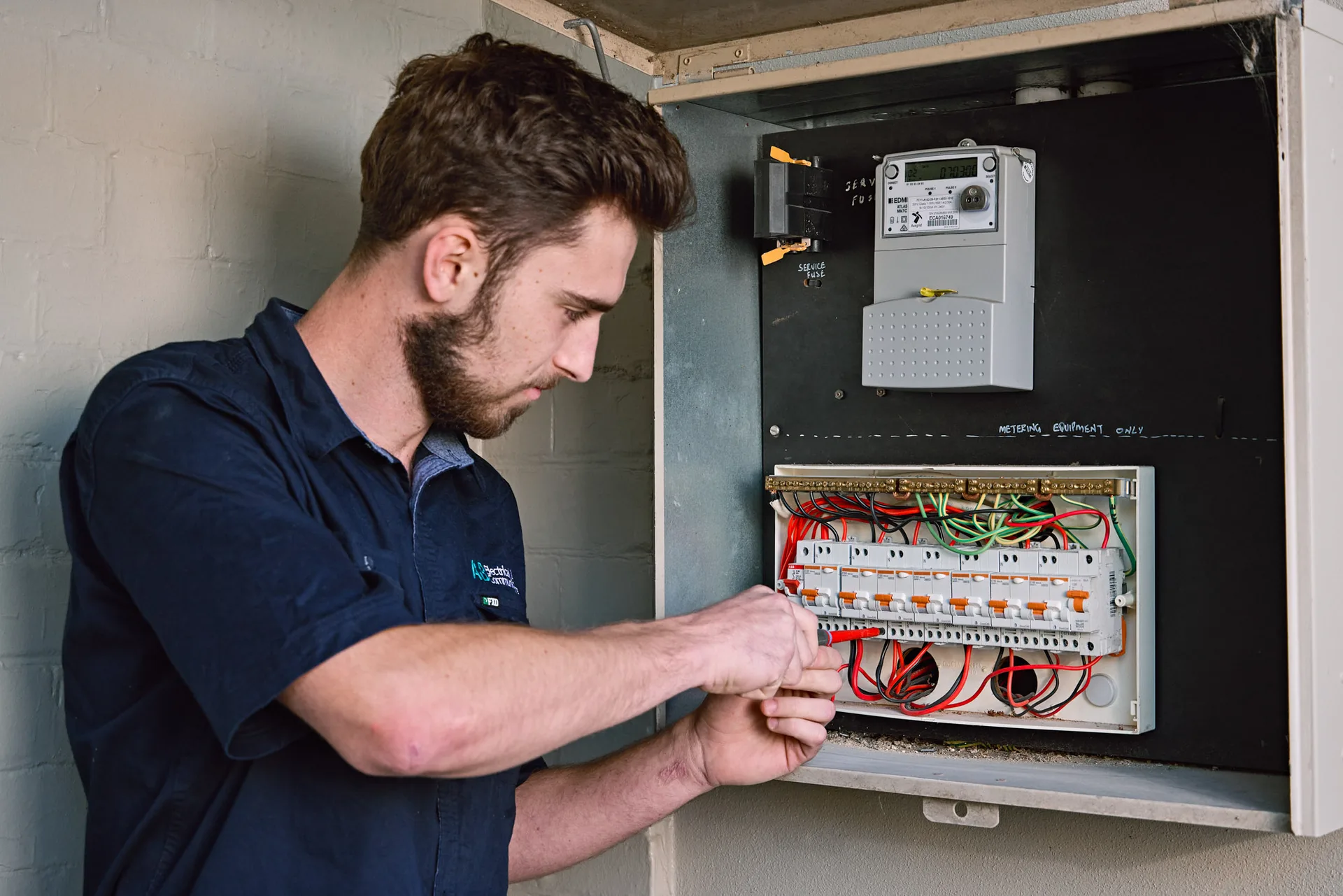
Most tripped breakers come down to one of these, roughly from most to least common.
- Circuit overload, where too many devices draw more current than the circuit can carry
- A faulty appliance with an internal fault pulling excess current through the circuit
- A short circuit somewhere in the wiring, where live and neutral make unintended contact
- A safety switch fault, where the RCD itself is failing rather than detecting a genuine issue
- Loose connections at the breaker or elsewhere on the circuit, generating resistance and heat
- Age and wear on an old breaker that's becoming less reliable at holding its rated load
How Serious Is It?
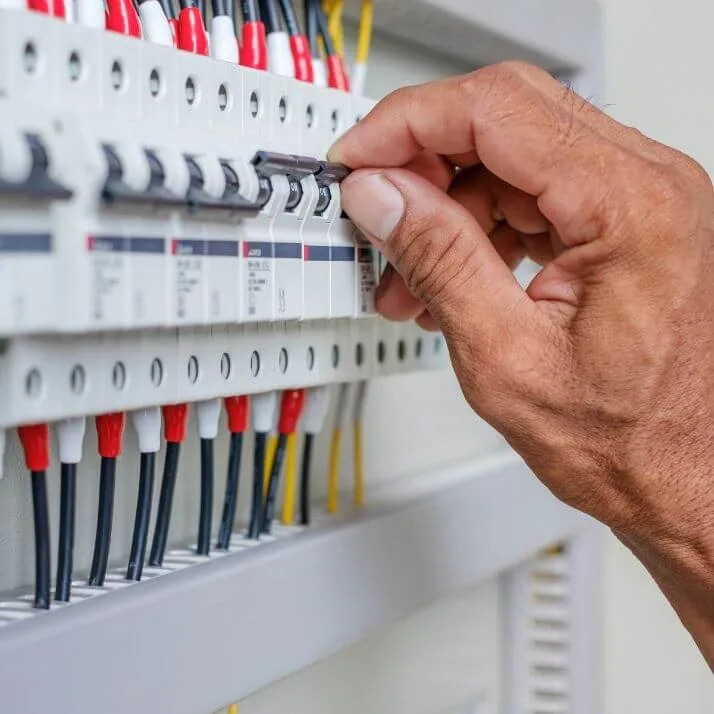
A breaker that trips once, resets, and holds is generally low urgency, especially if you can identify an obvious cause like too many appliances running together.
It's more serious if resetting it doesn't hold for more than a few seconds, especially with everything unplugged, or you notice heat, a burning smell, or discolouration at the switchboard.
Repeated tripping on the same circuit, no matter what's connected, is the clearest sign something behind the wall needs a proper look rather than another reset.
Do This First
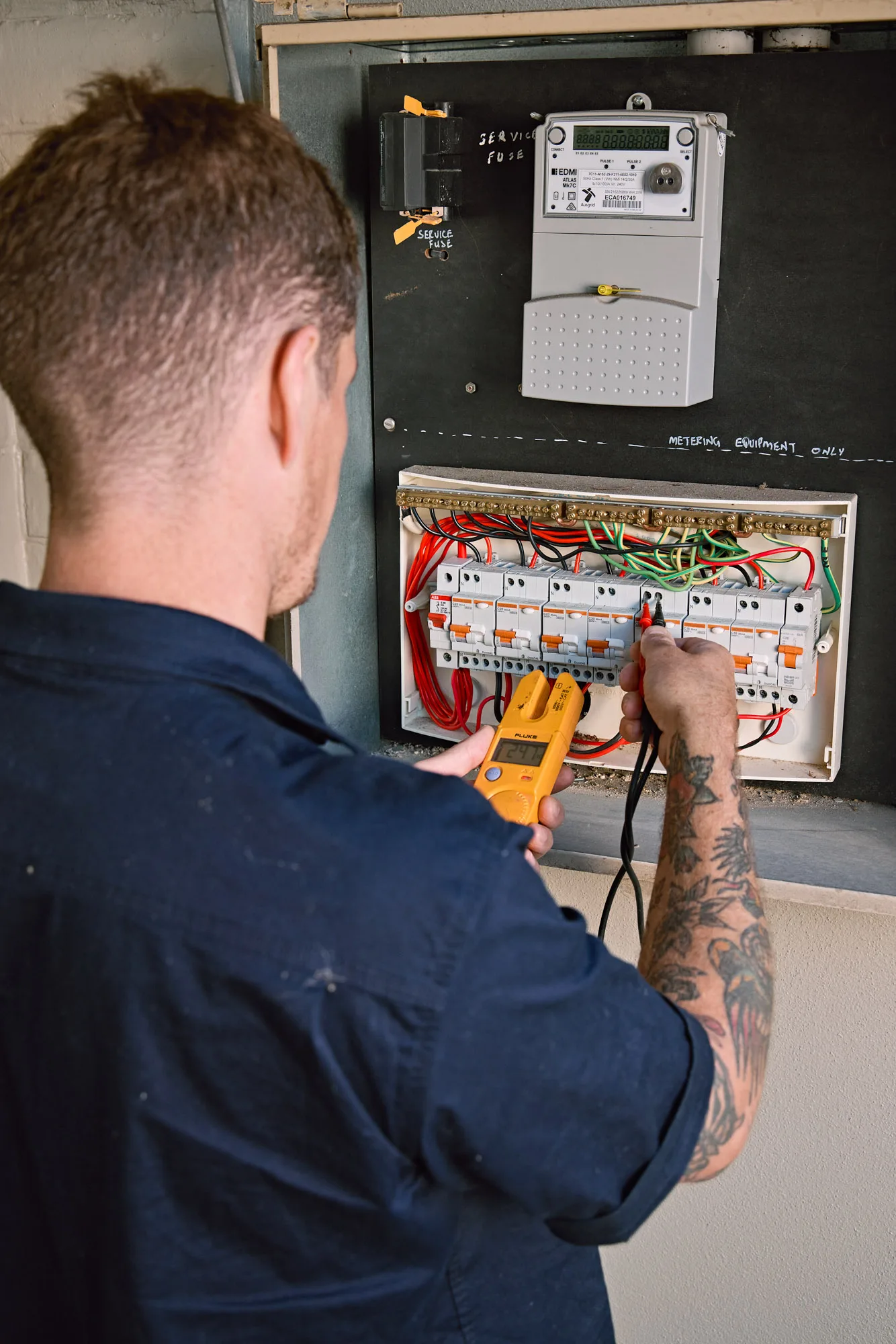
- Unplug everything on that circuit before resetting the breaker, to rule out a specific appliance.
- Reset the breaker once and see whether it holds with nothing plugged in.
- Note which circuit it is and what was running when it tripped, for when we arrive.
- Stop resetting it if it trips immediately, and call us instead of trying again and again.
How We Fix a Tripped Circuit Breaker
We isolate the affected circuit and test the breaker itself first, since a worn breaker can trip under normal load without any wiring fault at all.
If the breaker checks out, insulation testing helps us trace damage or a short that isn't visible just by looking at the switchboard. Once we know the cause, the faulty part gets repaired or replaced, and the circuit is tested under load before we finish up.
Notifiable work gets a Certificate of Compliance once it's tested and complete.
The Waitara Pattern We Keep Seeing
Plenty of period homes on Waitara's quieter streets still run circuits sized for a far lighter household than what's plugged in today, which makes overload one of the most common reasons a breaker trips here.
Renovation work across this same housing stock frequently uncovers the reason once a wall is opened up: ageing cable that's been quietly struggling under the extra demand for years.
Prevention Beats Repair
One of these usually stops a breaker tripping for good, rather than another reset.
- Give demanding appliances their own circuit rather than sharing one with everything else
- Replace an old or unreliable breaker that's past its working life
- Get wiring inspected when tripping keeps happening with no obvious appliance cause
- Keep high-draw appliances off the same circuit as everyday lighting and outlets
- Have the switchboard properly assessed if this has become a pattern rather than a single incident
The Habit Worth Breaking
Flicking a tripped breaker back on and hoping it holds is the most natural response there is, and it's also the one that delays a proper fix the longest.
Every reset that trips again is the circuit telling you the same thing, just louder each time. A breaker doesn't get tired of tripping or eventually give up and stay on.
If it's tripped more than twice on the same circuit, that's the point to stop resetting and start calling.
Which Appliances Trip It Most
Some appliances pull far more current the instant they switch on than they do once they're running, and that initial spike often tips a shared circuit over the edge.
Heaters, air conditioners, kettles and anything with a compressor or heating element are the usual culprits, especially two or three sharing a circuit at once.
An appliance that's developed an internal fault can also trip a breaker without any other visible sign of a problem.
Nearby Suburbs and Related Faults
Buzzing or crackling from the board alongside the trip is worth reading up on our switchboard noise page, and any hint of burning points instead to burnt smells.
We cover the neighbouring suburbs too, including Hornsby, Wahroonga, Normanhurst, Asquith and Mount Colah.

Get in Touch Today Before It Gets Worse
Breaker won't stay reset, or keeps tripping for no obvious reason? Call (02) 9538 7444.
We'll find out why and fix it properly, often same or next day.
Common questions
Your Tripped Circuit Breaker FAQs
Is a tripped circuit breaker an emergency?
Not on its own, if it resets and stays on. It becomes urgent if it trips again immediately with nothing plugged in, or if you notice heat or a smell near the switchboard.
Can I keep using the circuit while I wait?
Only if the breaker stays reset without tripping again. If it trips as soon as you switch it back on, leave it off and call us rather than trying repeatedly.
How much does it cost to fix a tripped circuit breaker?
Cost comes down to what's wrong. Overload on one circuit is a quick, inexpensive fix, and a wiring fault runs higher, with an agreed price either way before work begins.
Is it my appliance or my wiring?
Both are common causes. Testing starts with whatever was plugged in and working from there back into the circuit, until we land on what actually caused the trip.
How do you find the fault?
We isolate the circuit, test the breaker itself, and work through every connection point on that run until we pin down exactly where the fault sits.
Will the repair come with a certificate?
Yes. Notifiable repairs are tested and certified before we finish, leaving you with paperwork that confirms the standard of the fix.